

Diagnostic test
EEG testing: routine, sleep-deprived and long-term EEG at home
An EEG (electroencephalogram) records the brain’s electrical activity through small sensors on the scalp. It is the main test used to look for seizure activity. INPM offers routine and sleep-deprived EEG in the office, about 45 minutes each, and REMI long-term EEG, a wireless recording you wear at home for up to 10 days while you keep your normal routine.
What is an EEG and what is it for?
An EEG measures the electrical signals that pass between brain cells. It is the main test to evaluate seizures and epilepsy, and it also helps evaluate spells, blackouts, confusion and memory lapses. INPM offers three types:
Routine EEG
A recording in the office while you rest, about 45 minutes in total.
Sleep-deprived EEG
A recording after a short night’s sleep. Drowsiness and sleep reveal brain activity that does not show up on a routine EEG: by coming in tired, you give us a much better chance of capturing patterns that help your doctor make a diagnosis.
REMI long-term EEG at home
A continuous recording with small wireless sensors you wear at home for up to 10 days, while you keep your normal routine.
Sleep-deprived EEG
Why might your doctor order it?
- Evaluation of suspected seizures or epilepsy
- A normal routine EEG when seizures are still suspected
- Spells, blackouts or episodes of unresponsiveness of uncertain cause
- Telling seizures from fainting, panic attacks or other events
- New or unexplained neurologic symptoms: confusion, memory lapses, staring spells
- Follow-up of known epilepsy when symptoms or medicines change
What should you expect?
Before
- Try to sleep only 4 hours the night before.
- Wash and dry your hair the night before, with no conditioner, oils, gel or hairspray.
- Eat a normal meal before coming in. Do not skip food.
- Continue all medicines, including anti-seizure medicines, unless told otherwise.
- Avoid coffee, tea, energy drinks and other stimulants the morning of the test.
- Bring someone to drive you home: you will be tired and may fall asleep on the way.
During
A technologist places about 25 small sensors on your scalp with a sticky paste. You lie or sit comfortably while we record. We may ask you to breathe deeply for a few minutes, watch flashing lights briefly and try to fall asleep. Sleeping during the test is the goal: the more you sleep, the more informative the recording.
After
The technologist removes the sensors and cleans off most of the paste; you may want to wash your hair at home. Have your driver take you home.
Why sleep-deprived?
The most common question we hear, and a good one.
- Sleep activates brain patterns. Many epileptiform abnormalities only appear in drowsy or sleep states, not when you are fully awake.
- It nearly doubles the test’s sensitivity. Sleep-deprived EEGs detect epileptiform activity in many patients whose routine EEG was normal.
- Falling asleep is the goal. Do not try to stay awake: the more you sleep during the test, the better.
REMI long-term EEG at home
REMI uses just 4 small wireless sensors, about the size of a quarter and a quarter of an inch thick, placed behind both ears and on the forehead. They connect to a small dedicated phone that we provide.
- Small wireless sensors behind the ears and on the forehead
- 4
- Recording at home while you keep your routine
- 10 days
- Keep the REMI phone within this distance at all times
- 13 ft
Why might your doctor order it?
- Spells or events that happen infrequently (less than once a week)
- A normal routine or sleep-deprived EEG when seizures are still suspected
- Telling epileptic seizures from non-epileptic events such as fainting, panic or parasomnias
- Characterizing seizure types and counting their frequency in known epilepsy
- Events that happen mainly at night or during sleep
- Subtle events: staring spells, déjà vu, aura-only episodes, lost time
- Assessing the response after a medicine change
- Evaluating altered awareness or unexplained memory gaps
What should you expect?
Before
- Continue all medicines unless told otherwise.
- Plan for the 10-day monitoring period.
During (10 days at home)
A technologist places the 4 sensors on your scalp, behind both ears and on the upper forehead, with small adhesive stickers. Keep the REMI phone with you at all times, within 13 feet, and charge it whenever possible. Press the Add Event button whenever you experience something unusual, and change the sensor stickers daily using the kit we provide.
After
Return to the office to have the sensors removed; the technologist removes the adhesives and cleans the skin. A neurologist analyzes the recording, and results are typically ready in 7 to 14 business days.
Will I need to stop living my life?
A common question, and the short answer is no.
- Continue your normal routine. Work, school, parenting and light exercise are all fine.
- Driving is usually allowed. Your doctor will tell you if there is a reason to pause it.
- Press the button when something happens. This is the most useful thing you can do: it lets us match what you felt with what we recorded.
- Showering is fine. Remove the sensors before each shower and reapply them with fresh stickers after; we will show you how. No swimming or hot tubs.
What can an EEG show?
Sleep-deprived EEG
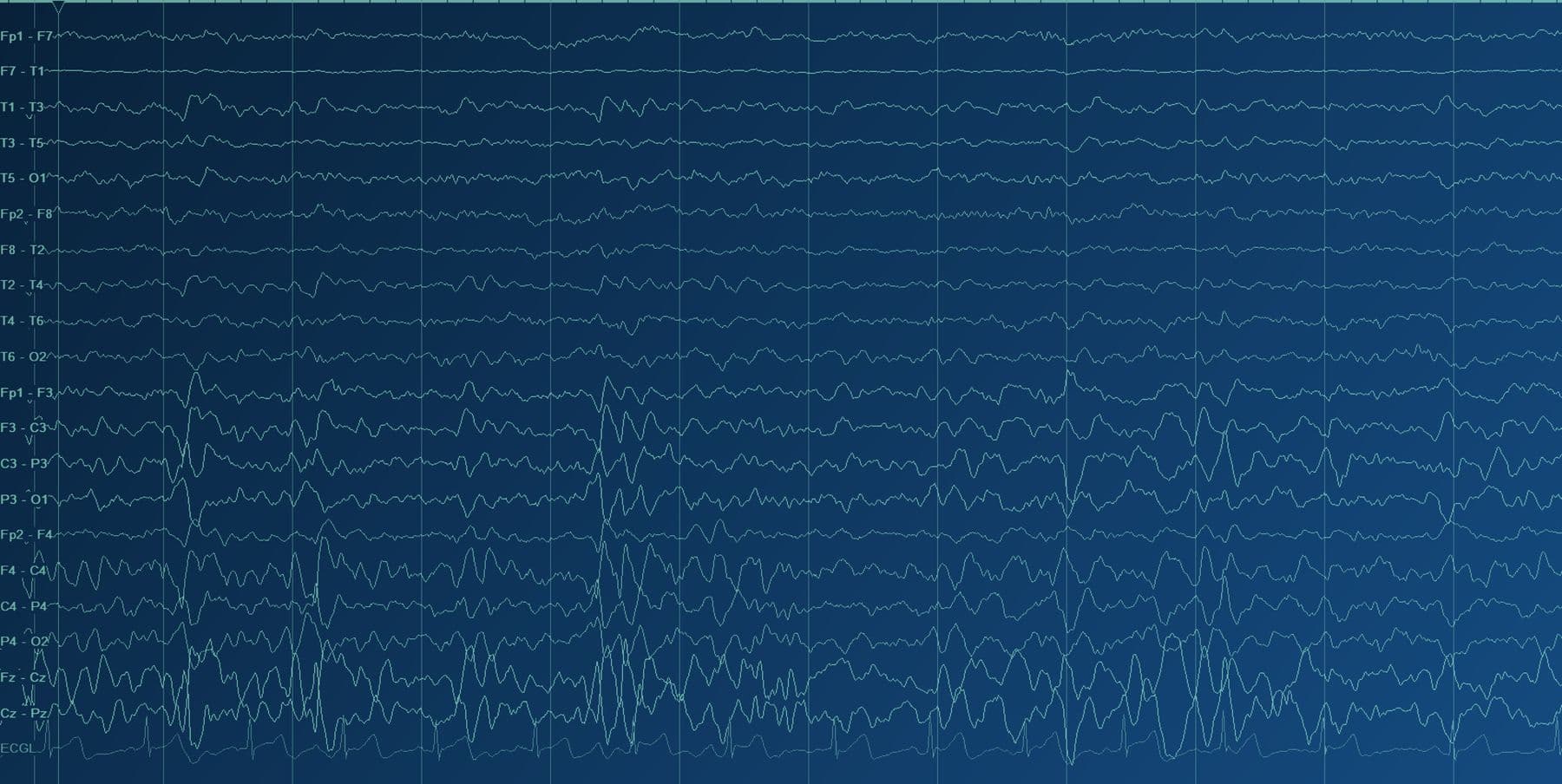
- Epileptiform activity: spikes or sharp waves that suggest a tendency toward seizures
- Where in the brain abnormal activity occurs (focal or generalized)
- Slowing patterns that suggest brain dysfunction
- Activity during sleep and drowsiness, when many seizures start
Long-term EEG
- Epileptiform activity: spikes, sharp waves and spike-wave discharges
- Where in the brain abnormal activity occurs
- Time-of-day patterns, including sleep-related events
- How the events in your diary match your brain activity
The findings guide the diagnosis, medicine choices and whether more testing, such as an MRI or video EEG monitoring, is needed.
Is an EEG safe?
Among the safest tests in medicine
Yes. EEGs use:
- No radiation
- No contrast or injected dye
- No needles, no IV and no medicines
- Safe in pregnancy and in children
- Electrode paste washes out of hair easily
- Long-term EEG adhesives are skin-friendly and rarely cause irritation
- Long-term EEG does not interfere with everyday electronics or implanted devices
If a medical issue comes up during long-term monitoring, you can remove the device early. Call our office right away.
How long does it take, and where is it done?
- How long it takes
- Routine and sleep-deprived EEG: about 45 minutes. Long-term EEG: up to 10 days at home
- When results are ready
- Long-term EEG: typically 7 to 14 business days, analyzed by a neurologist
- Where
- Walnut Creek and Vallejo
- Insurance
- Coverage depends on your plan. Please check with your insurance company.
 East Bay
INPM Walnut Creek
301 Lennon Lane, Suite 203Walnut Creek, CA 94598
- Wed and Fri
- 8:00 AM – 5:00 PM
- Sat
- 9:00 AM – 3:00 PM
 North Bay
INPM Vallejo
155 Glen Cove Marina Rd, Suite 100Vallejo, CA 94591
- Mon, Tue and Thu
- 8:00 AM – 5:00 PM
Questions
Frequently asked questions
01Why do I have to sleep less before a sleep-deprived EEG?
Many epileptiform abnormalities only appear when you are drowsy or asleep, and a sleep-deprived EEG nearly doubles the test’s sensitivity. Try to sleep only 4 hours the night before, and do not try to stay awake during the test: the more you sleep, the better.
02Can I shower during a long-term EEG?
Yes. Remove the sensors before each shower and reapply them with fresh stickers afterward; we will show you how. Swimming and hot tubs are not allowed.
03Can I keep working and driving during a long-term EEG?
Yes. Work, school, parenting and light exercise are all fine, and driving is usually allowed. Your doctor will tell you if there is a reason to pause it.
04Does an EEG hurt?
No. The sensors only record activity and do not send electricity into your head. EEGs use no radiation, needles or IV medicines and are safe in pregnancy and in children.
Referral required
Start with a referral from your doctor
New patients are seen by referral. Your primary care physician can fax the referral to (707) 980-6692 or send it through EPIC, and our office will call you to schedule.
- Referral fax (707) 980-6692
- EPIC referral
- We call you to schedule